Treun Scotland
Treun enables young people in Scotland to connect with the great outdoors. Growing resilience, courage, mental and physical wellbeing, social and personal skills, employment readiness and a conservation ethic. We support them to build positive futures.
The Project History
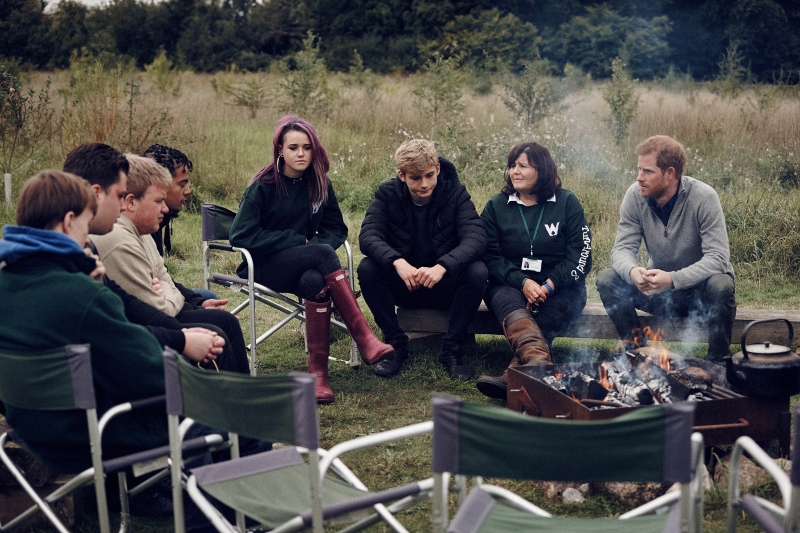
Since 2014, Wilderness Foundation has developed the ‘Treun’ (Gaelic for ‘Brave’) programme to provide an immersive experience in wild and remote settings. The programme utilises the power of the outdoors and a therapeutic grounding to allow young people in Scotland, aged 13-16 yrs, to connect with themselves, their peers and the environment as they build resilience and capacity for navigating their next stages in life.
Treun is very much an evidence-based programme. It has now benefited around 300 young people from more than 40 schools in Scotland. We have also worked in partnership with the University of Essex to ensure robust evaluation, and solid evidence base. We evaluate and review our processes each year to ensure the best possible outcome for the young people who participate.
We are committed to providing bespoke nature immersive experiences that use the outdoors as a therapeutic tool to help build resilience and improve mental wellbeing.
We are a proud partner of Scottish Land & Estates.
The Programme
Treun offers a therapeutic, experiential learning programme that equips young people (aged 13-16) with the skills, confidence and self belief that helps them face the world with courage and purpose in order to deal with these challenges.
From 2026 Treun has been developed into an extended format that is delivered in schools and youth groups over a six month period. The programme involves:
- Outreach – introductions, selections and interview process
- Successful applicants are invited to join the programme
- Regular Workshops
- Local camping weekend away
- Five day wilderness therapy immersion on a remote estate
- Conservation Volunteering
- Presentation to Estate staff/funders/school
- Employability skills development and workshops
- Graduation
- Peer Leadership Development for graduates
- 121 mentoring or counselling as needed
- John Muir Award
- Leave No Trace Training
Locations
In recent years we have worked with schools in Perth and Kinross, Falkirk, North Lanarkshire, South Lanarkshire, and Midlothian, but we are open to working with schools in other areas where the appropriate criteria can be met.
Our programme runs in areas close to schools, and our partner estates. Particular thanks is due to Crown Estates at Glen Livet and Atholl Estates who currently support Treun.

Graduation
In the course of the week-long programme, participants achieve their John Muir Award Discovery Level, Leave No Trace Awareness certification and Treun completion certificate. (image shows recent graduates next to the River Avon, Glenlivet Estate)
We encourage the presentation of certificates at school prize giving to promote recognition of the young people’s achievement as part of the wider school community.
These recognitions enhance not only participants’ mental health & wellbeing but also their environmental awareness and employability. Following graduation, we offer Treun participants with therapeutic support and/or volunteer mentor support if required. Where possible we also encourage peer mentors to support the next cohorts coming through.

The Need
Young people are increasingly struggling to engage with education, relationships, mental health, and often adverse childhood experiences. They are living in a world where resilience has been undermined through experiences of Covid, a phone based childhood, on-line bullying and impacts, and has led to an overwhelming number of young people who suffer with anxiety and other limiting experiences.
Young people in Scotland are identified by schools and partners as those who will benefit from in depth, time generous, adventurous engagement that will help meet their needs in an alternative way where their strengths and potential can come to the fore.
Often our young people see themselves as different or not good enough and through nature based, therapeutic engagement can come out of the programme with a positive and productive mindset to make the most of life.

Outcomes
Improved mental health and employability:
- Develop and improve personal and social skills for life including confidence, overall wellbeing, self-esteem, self-care and self-reflection
- Improve resilience and mental wellbeing
- Improve physical and emotional health
- Develop emotional coping strategies that can be used for life
Increased nature connection and tools for helping the environment:
- Increase their connection to nature, Scottish Outdoor Access Code/Leave No Trace Principles
- Increase their knowledge of Scotland’s wildlife and natural heritage
- Increase their understanding of Scotland’s land and estates and rural heritage
- Encourage and learn about volunteering
- Learn camp craft and how to access nature and the outdoors
Increased employability and leadership pathways:
- Improve aspiration and confidence to seek work or further studies
- Learn and apply new communication skills
- Improve and learn new employability skills
- Development of an alumni group for ongoing mutual support and personal growth

STAFFING
We carefully select staff and volunteers to work with young people on the Treun programme so that we have a focus on empathy and understanding while holding the therapeutic structure of the programme.
The Treun team is overseen by Jo Roberts, who is a Master NLP Practitioner, Advanced Psychotherapeutic Counsellor and Qualified Clinical Supervisor, and Hannah Blair, an experienced mountain leader and psychology PhD who has worked with the Treun programme since 2022. Other members of the team have backgrounds that include outdoor education, therapy, policing, education, and research. We work closely with several Scottish Estates and their land management staff who support our young people in conservation work and in achieving their John Muir certificate whilst on trail within these specific estates.
We are grateful to a range of funders who enable this to be a sponsored programme which makes it inclusive to all.
Young People & Mental Health
A survey by the Mental Health Foundation (2019), of 609 Scottish young people aged 16–25 showed that:
of young adults feel they are unable to speak about their emotions with others
of young people say they often feel they lack companionship
of young people say they feel they don’t have a trusted adult to go to for advice and support if they’re experiencing a problem
These problems disproportionately affect youth from lower income households and areas of deprivation (Scottish Children’s Services Coalition 2019) along with evidence that mental health issues and unemployability are linked. Incidence of diagnosed mental health, social, emotional and behavioural conditions in young people has more than doubled since the pandemic – ‘Young people’s mental health deteriorated at greater rate during the pandemic | University of Oxford’. The greatest proportion of CAMHS referrals come from the most deprived areas – ‘Children and young people’s mental health in Scotland | Scottish Parliament’. The negative impact of COVID-19 on young people is exacerbated for those groups already at risk of poorer mental well-being – Children and young people’s mental health in Scotland | Scottish Parliament
Our Impact
Treun improves mental health and empowerment of young people to recognise their individuality and improve self-esteem. Our team offers tools and methods of engagement to build educational aspiration, self-sufficiency and enables participants to take positive steps towards a meaningful future.
There is a large body of research, including our own, that provides evidence of the positive links between nature based experiences, self esteem, mental wellbeing and employability.